ServicesWhole-Home Rewiring
Whole-Home Rewiring in Dalworthington Gardens
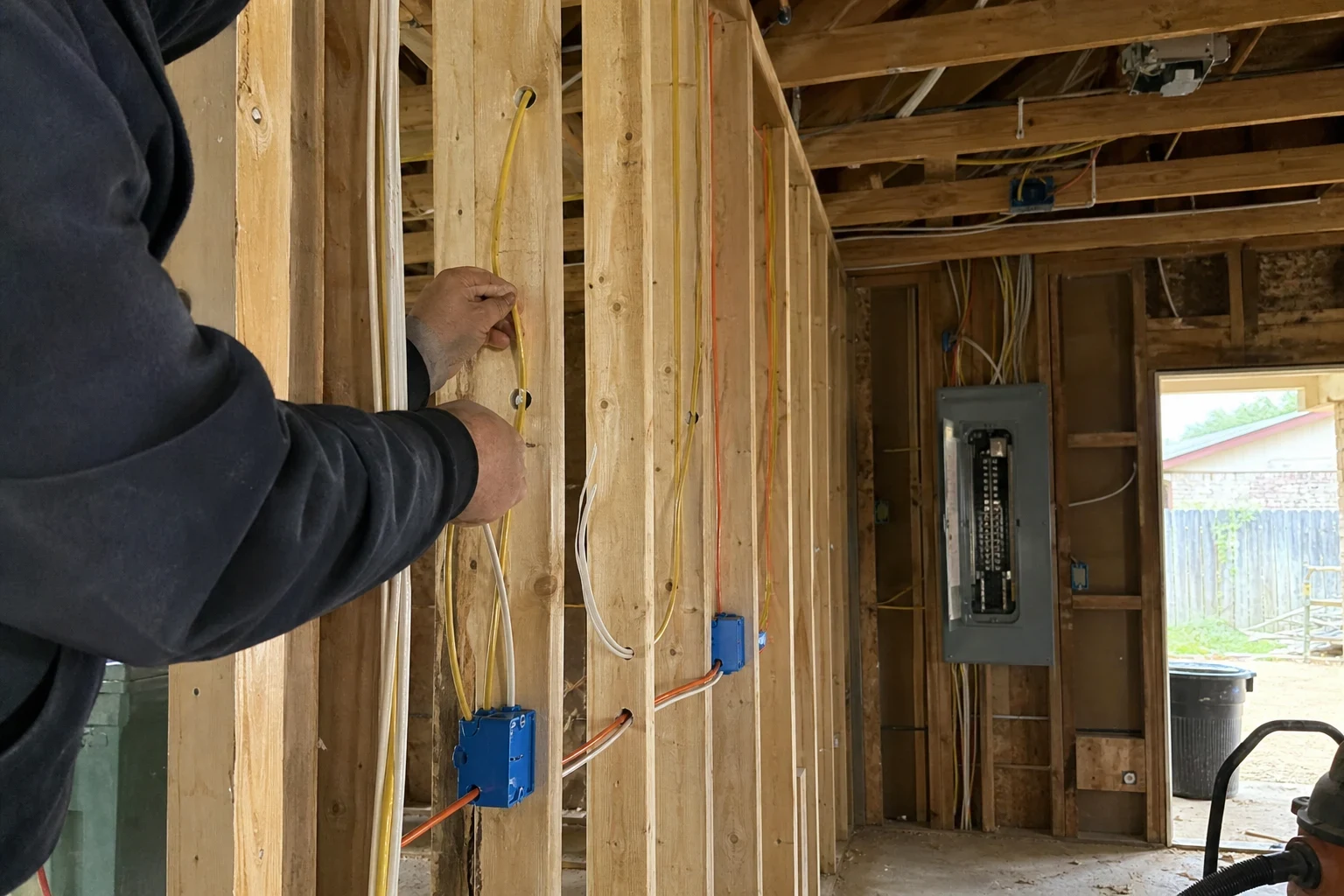
We replace worn, undersized or outdated wiring throughout your home with new copper circuits, grounded outlets and a panel directory you can actually read. The same small crew opens the walls, pulls the wire, meets the inspector and patches up, so you see familiar faces from the first day to the last.
When rewiring is the right call
A rewire replaces the circuits that carry power out from the breaker box to each receptacle, switch and light in your home. It is a bigger job than a repair, and we only recommend it when the existing wiring can no longer be trusted: cloth or rubber insulation that crumbles when handled, aluminum circuits with loosening terminations, ungrounded runs throughout the house, or years of add-ons that nobody can trace.
If the trouble is limited to a few circuits, we will say so and point you toward electrical repair instead. When a full rewire does make sense, the work is planned under our Master Electrical License, and the people who walk your home on the first visit are the people who finish it.
A small crew means nothing gets lost between shifts. You know who is in your home, and they know where every wire went.
What a full rewire includes
- New copper circuits
- We pull new copper cable sized for each circuit's load, with a ground conductor on every run. Kitchens, bathrooms, laundry and the garage get their own circuits where code calls for them.
- New grounded devices
- Every receptacle, switch and box on the rewired circuits is replaced. GFCI and AFCI protection goes in where it is required. We terminate on screw or clamp terminals rather than push-in stab connections, which tend to loosen over the years.
- Panel review and labeling
- We check whether your panel can carry the new layout. If it cannot, a panel upgrade appears as its own line on the estimate so you can weigh it separately. Either way, you finish with an accurate, legible directory.
- Careful access and patching
- We cut small, deliberate openings instead of stripping walls, fishing wire from the attic and crawl space wherever the house allows. Each opening is filled and smoothed so your painter can pick up from there.
- Permits and inspection visits
- The permit is filed by us, and we book the rough-in and final inspections as required by the local jurisdiction. One of our crew is on site whenever the inspector arrives.
- Linked smoke and CO alarms
- When the scope calls for it, we hardwire smoke and carbon monoxide alarms on a shared signal line. A warning that starts in the hallway is then heard in the bedrooms too.
Signs your home may need rewiring
Cloth-covered or brittle wire
Fabric-wrapped wire in the attic, or insulation that cracks when bent, has aged past the point of insulating reliably.
Mostly two-prong outlets
Ungrounded outlets throughout usually mean ungrounded wiring behind them. Three-prong adapters do not change that, and surge protectors cannot work properly without a ground.
Warm cover plates or a burning smell
Heat at a switch or outlet points to loose connections or overloaded wire. Turn that circuit off at the panel and have it looked at soon.
Dimming across several rooms
One flickering lamp is usually a bulb or fixture. Lights dipping in different rooms whenever an appliance starts suggests tired connections or circuits carrying more than they were built for.
Aluminum circuit wiring
Older aluminum circuits expand and contract more than copper, which works connections loose over time. Rewiring replaces them outright rather than patching each termination.
Years of piecemeal additions
Splices buried in walls, extension cords that never leave the outlet and breakers labeled with question marks all show a system that has outgrown its original plan.
What shapes the cost of rewiring
Every rewire is priced from the walkthrough, not from square footage alone. Your written estimate lists each part of the job on its own line, so the total makes sense to you before you approve anything. These are the factors that move it most.
Size and circuit count
More rooms and more dedicated circuits mean more cable, more devices and more hours of labor.
Access to the walls
A tall, open attic and a crawl space make fishing wire far easier than a low attic over a slab. Plaster walls and finished ceilings take more care to open and patch than drywall.
Panel capacity
If your current panel lacks space or capacity for the new circuits, a replacement adds to the scope. We list it separately so the choice stays yours.
Patching and finish
Patching ready for paint is part of our work. Matching heavy wall texture or working around custom trim and built-ins adds time.
Permit and required protection
Permit fees and code-required devices such as AFCI breakers and interconnected alarms are part of a compliant job and are shown on the estimate.
How a rewiring job runs
- 1
Walkthrough and circuit map
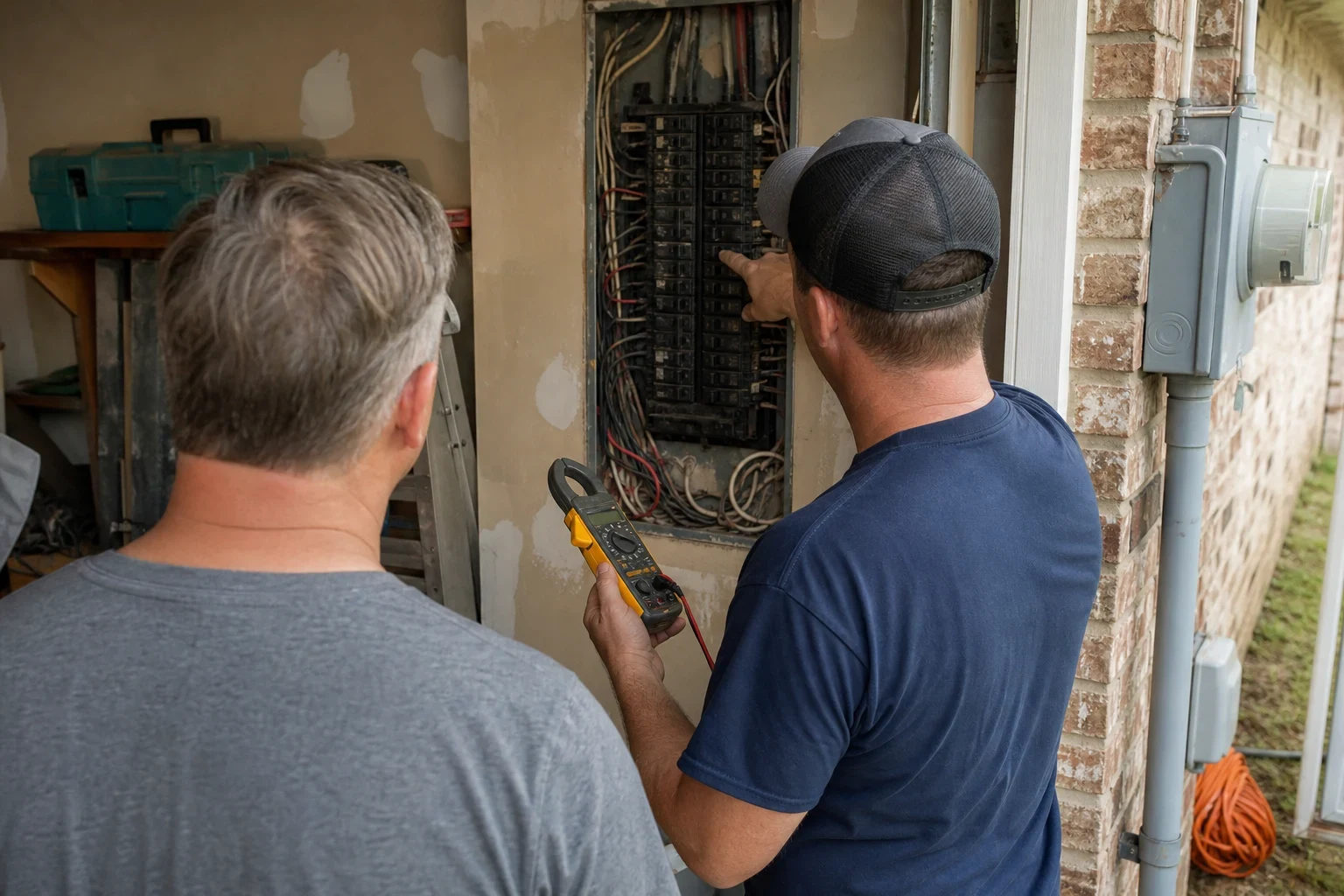
We open the panel, test circuits and look through the attic and crawl space. You get photos of what we found, a plain explanation and a written, line-item estimate.
- 2
A room-by-room plan
We agree on the order of work so most of your home keeps power most days. Furniture is moved away from walls and floors are covered before any cutting starts.
- 3
Rough-in
The crew pulls new cable, sets boxes and makes up connections, then disconnects the old wiring and removes it where it is reachable. In summer we do attic work early in the day, before North Texas heat makes the space unsafe.
- 4
Inspection, then close-up
Once the rough-in inspection passes, we install devices, test every circuit under load and patch the openings. Each day ends with the work area vacuumed and tidied.
- 5
Final walkthrough
After the final inspection, we walk you through the new panel directory, show you where the GFCI resets are and answer whatever questions are left.
Rewiring questions we hear often
Do we need to move out while the house is rewired?
Usually not. We move through your home in sections, keeping the kitchen and at least one bathroom powered on most days, and each evening we let you know which rooms will be without power tomorrow. The rooms we are working in will see some noise and dust; we keep it contained and clean up before we leave each day.
How long does a whole-home rewire take?
Timing comes down to square footage, how easy the attic and walls are to reach, and when the inspector has openings. After the walkthrough we give you a realistic count of days along with the order we plan to move through the rooms. Because the same crew stays on your job, it does not stall while people are reassigned.
Will you have to tear out my walls?
No. We open small, targeted holes near boxes and at top and bottom plates, then fish new cable through the cavities. Those openings are patched and left ready for paint before we leave.
Who actually does the work in my house?
Our own licensed and insured electricians, the same few people from the first cut to the final walkthrough. We also file the permit and stay with the job through each required inspection.
What warranty comes with the rewiring?
Our work carries a 1-year workmanship warranty. If a connection we made or a device we installed fails because of how it was installed, let us know by phone and we will come back and correct it.
Talk through your home's wiring with us
Tell us what you are noticing and roughly how old the wiring might be. We will set up a service visit for your home in Dalworthington Gardens or nearby Arlington and Kennedale, walk the house with you and put a written plan in front of you before any wall is opened.