ServicesEV Charger Installation
EV Charger Installation in Dalworthington Gardens
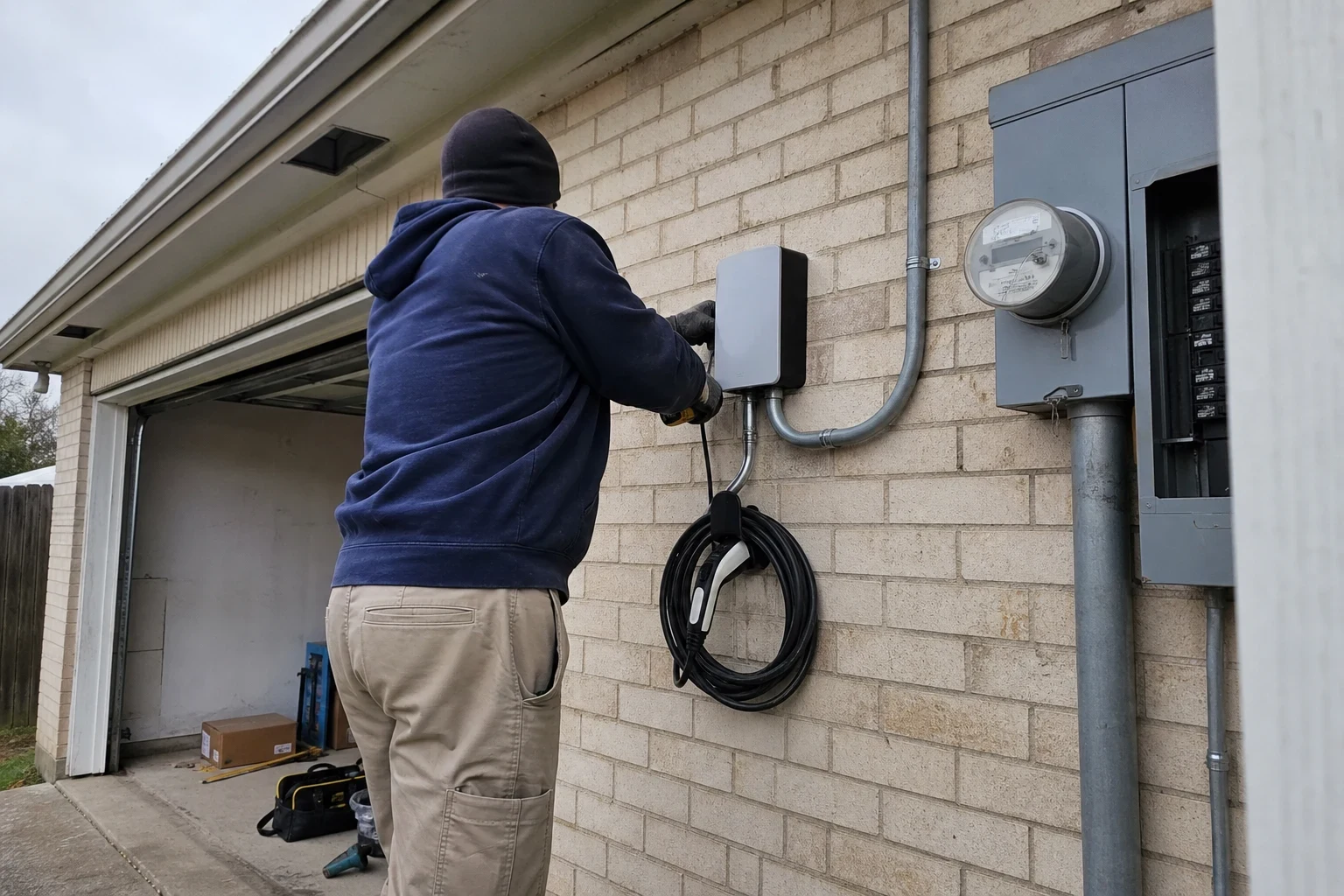
A Level 2 charger needs a circuit of its own, matched to what your panel can spare and the car you drive. One electrician checks your panel, mounts the charger, runs the wire and shows you the first charge, so every detail stays with one person.
A Charger That Fits Your Panel and Your Garage
Plugging an EV into a standard outlet adds only a few miles of range per hour. Moving up to a 240-volt Level 2 charger with a circuit to itself usually covers a full day's driving while you sleep. Getting there safely depends on what your panel can carry, how far the charger sits from it, and whether the wire, breaker and charger are matched to each other.
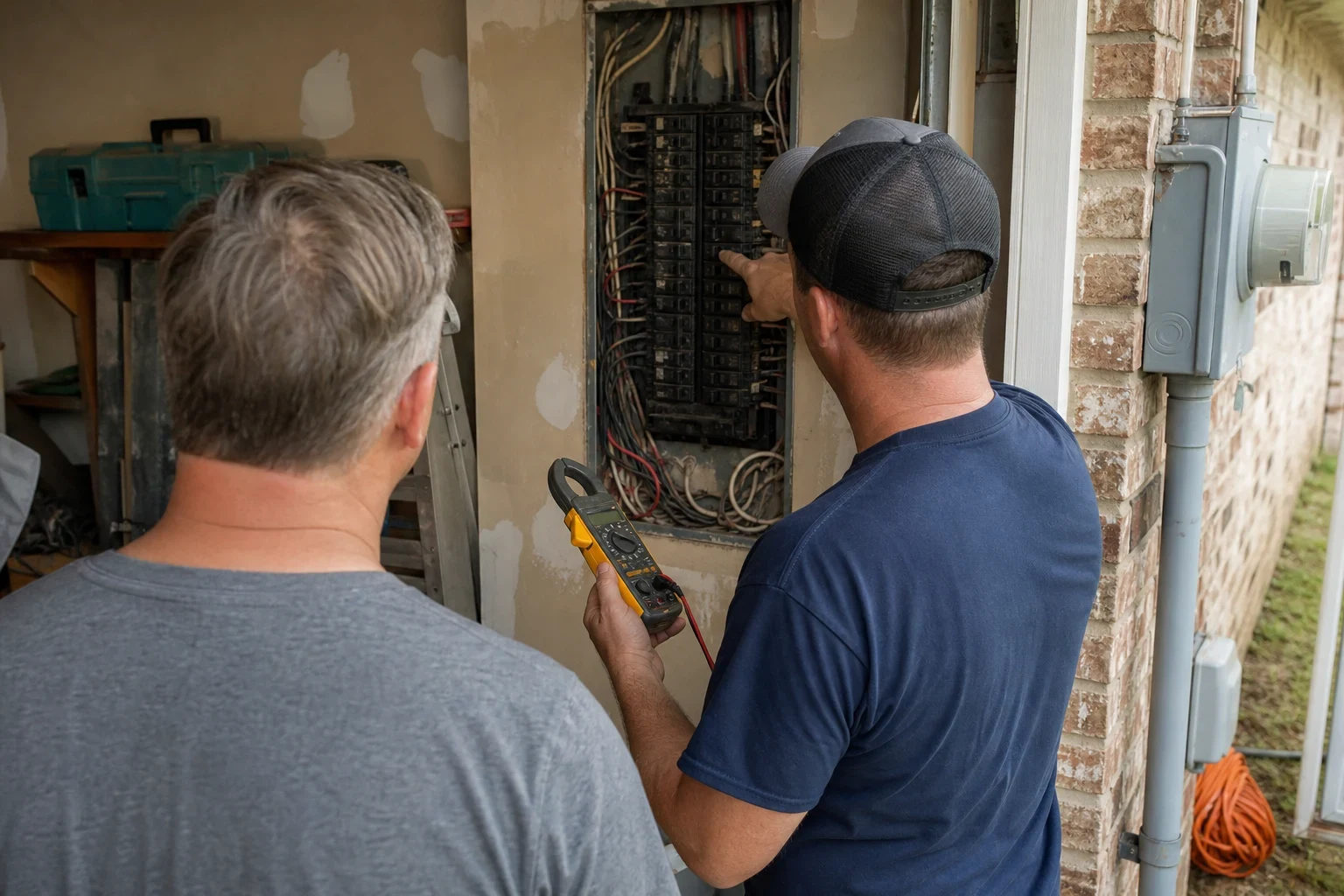
We start with a load calculation, not a guess. If your panel has room, the job is usually simple. If it does not, we tell you plainly and lay out the options, from a smaller circuit to load management to a panel upgrade, so you choose with the full picture.
Our crew is small on purpose. The person who measures your garage is the person who installs the charger, so nothing gets lost between the estimate and the work.
What Goes Into a Charger Job
- Capacity check before sizing
- Before we pick a breaker, we tally the large loads already on your service, such as the air conditioner, electric range and dryer. That tells us how much headroom is left for a car charging for hours at a stretch.
- A 240-volt circuit of its own
- The charger gets a new breaker and copper conductors rated for its current, with matching overcurrent protection. No lights or outlets ride along on that line.
- Wall unit or plug-in receptacle
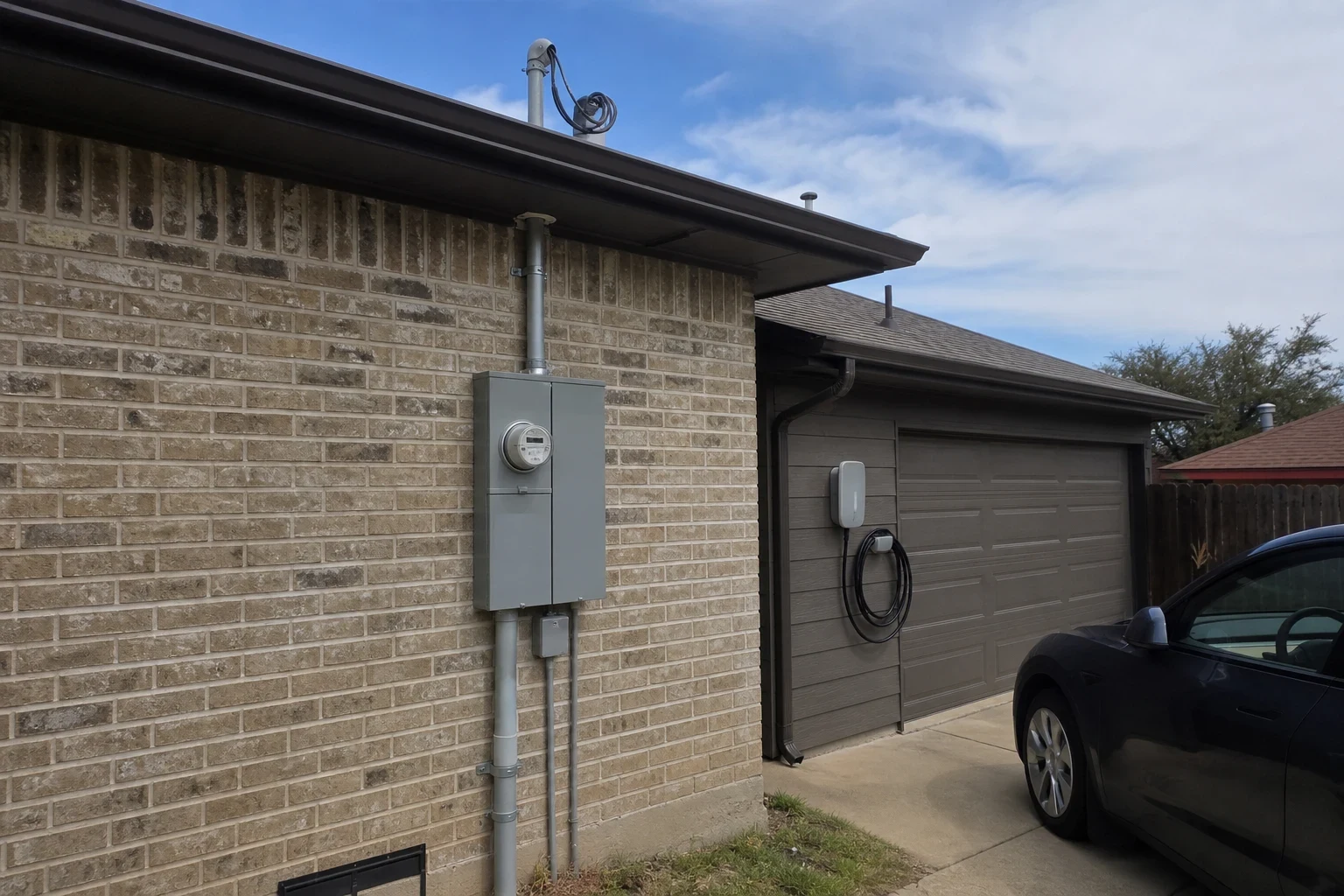
- Some owners want a hardwired charger; others prefer a rated 240-volt receptacle for a plug-in model. Either way, we set the height and position around where you park and how the cable meets the charge port.
- Tidy wire runs
- Where walls are finished, we fish the wire inside them whenever the framing allows. Any conduit that must stay visible is run straight, strapped evenly and kept close to the wall color.
- Permit and inspection
- Filing the permit is our job, along with booking whatever inspection the local jurisdiction requires. Where your utility needs notice of a new charger, we handle that coordination too.
- Setup and walkthrough
- We power up the charger, test it under load, connect it to its app if it has one and show you the breaker that controls it.
Signs It Is Time for a Proper Charger Circuit
Overnight charging is not enough
If a standard outlet leaves you short of a full commute by morning, a Level 2 circuit closes that gap.
The cord or outlet runs warm
A 120-volt outlet carrying a car for hours at a time can heat up at worn contacts. That warmth is a reason to stop and have it checked, not to keep going.
You are using an extension cord
Most charger makers warn against it, and long consumer cords are not built for continuous loads like an EV.
A new or second EV is coming
Planning the circuit before delivery lets us size it for the car you have and the one you may add later.
Breakers trip while the car charges
That usually means the circuit is shared or undersized. Our electrical repair work often starts right here.
How the Day Goes
- 1
Service visit and measurements
We look at your panel, measure the run to the parking spot and note anything in the way, like finished drywall or masonry. You get a written estimate before any wiring starts.
- 2
Permit filed
We file for the permit as required and confirm the charger model and circuit size with you.
- 3
Installation day
We cover the floor near the panel, shut off power only for as long as we need it, and install the breaker, wire and charger. Most single-car garage installs finish in one visit.
- 4
Testing and cleanup
We test voltage and run the charger under load, then vacuum drywall dust and haul away offcuts and packaging.
- 5
Inspection and follow-up
We meet the inspector and handle any notes. Our work carries a 1-year workmanship warranty.
What Moves the Cost
Every charger job is priced from what we find at your home, which is why we look before we quote. The written estimate lists each part of the work so you can see where the cost sits. Here is what tends to make one installation larger than another.
- Panel capacity
- When the panel has open slots and service to spare, the work is straightforward. A crowded or smaller panel might point toward a load management device or one of our panel upgrades.
- Distance and path
- A charger on the wall beside the panel takes far less wire and labor than one on the far side of a detached garage or out by the driveway.
- Circuit size
- Higher-amperage chargers need heavier copper and a larger breaker. We help you pick a size that matches your car's onboard charger rather than overbuilding.
- Wall and outdoor conditions
- Fishing through finished walls, drilling brick or trenching to an outdoor pedestal all add time. Outdoor installs also need weather-rated boxes and fittings, which matter in Texas sun and storms.
EV Charger Questions
Something not covered here? (682) 327-0474
Will a charger work in my garage?
Usually, yes. An attached garage is the spot we wire most often, since the panel tends to sit close by and the run stays short. Before settling on a circuit size, we confirm your panel has room for the added load.
Do I need a panel upgrade for a charger?
Not always. Many homes have the capacity for a 40-amp or 50-amp circuit. When they do not, a lower-amperage circuit or a load management device can avoid a panel change, and we explain both options before suggesting an upgrade.
Should I buy the charger first?
You can, and we are glad to install one you already own. If you have not bought it yet, talk with us first so the charger and circuit match. Some units hardwire only, and that changes the work.
Who does the work, and what credentials stand behind it?
Our licensed and insured electricians handle the installation, and the work is carried out under a Master Electrical License. The same person stays on your job from the first measurement to the final walkthrough.
Can the charger go outside by the driveway?
Yes. We use outdoor-rated chargers, boxes and conduit, and place the unit where the cable reaches without stretching across a walkway. The longer run and weatherproofing add some time compared with an indoor install.
Ready to Charge at Home
Tell us your car, where you park and roughly where your panel is. We will book a service visit to measure, check your load and give you a written estimate.