ServicesGenerator Installation
Generator Installation in Dalworthington Gardens
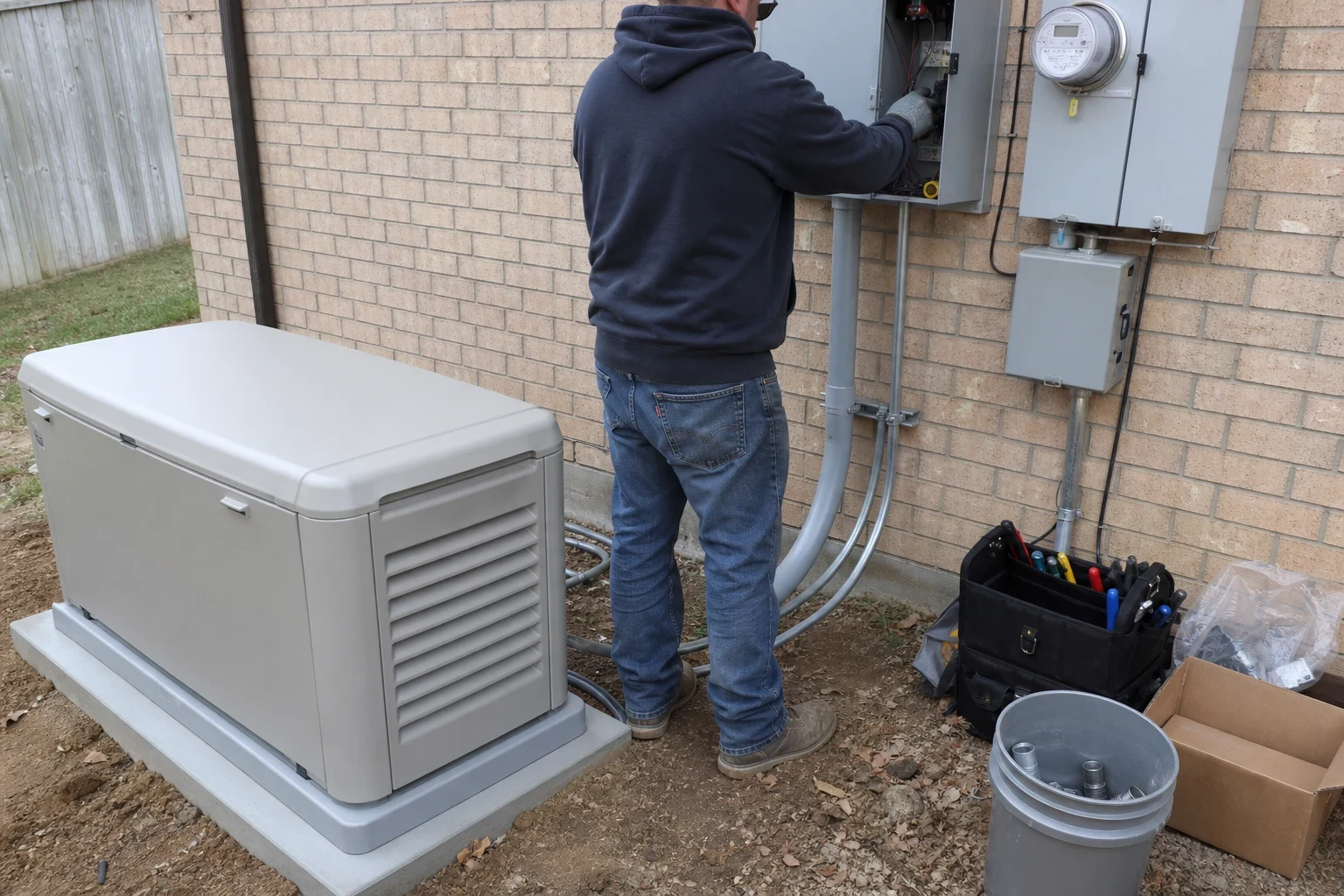
We install standby generators and portable generator hookups that keep the circuits you care about running when the grid drops. The same small crew sizes the system, wires the transfer switch, handles the permit and walks you through the first test run.
What a standby system really involves
The generator is the part you see, sitting on its pad beside the house. What decides whether it works on a stormy night is everything behind it: the transfer switch, the feeder back to your panel and a clear decision about which circuits it carries. Done well, the system senses the outage, starts itself, takes the load and hands it back to the utility when service returns, with no one flipping breakers in the dark.
Our team is small on purpose. The electrician who measures your panel and hears your priorities is the one who mounts the switch and runs the first start. There is no handoff between a salesperson and an installer, because we don't have one.
For some homes a battery system or a simple inlet for a portable unit is the better fit. When that's the case we say so, and our home battery backup systems page explains that option.
What the installation covers
- Load calculation
- We start with a short list of what matters to you when the grid is down. That might be the fridge, a gas furnace's blower, a few lights and the home office, or everything up to the air conditioner. The list drives the generator's size and the switch we recommend.
- Transfer switch wiring
- An automatic switch detects lost utility power, signals the generator to start and shifts your circuits over. For a portable unit we fit a listed inlet with a mechanical interlock, so it can never send power back onto the utility lines.
- Placement and pad
- The unit goes on a level pad at the manufacturer's required distance from windows, doors and vents, with working room left for service. We also consider where exhaust and engine sound will carry toward the neighbors.
- Feeder and control wiring
- We size conductors for the length of the run, protect them in outdoor conduit and seal every wall penetration. Each lug is torqued to the maker's spec so connections stay tight through summer heat and years of cycling.
- Permit, inspection and fuel coordination
- We handle the electrical permit and inspection as required by the local jurisdiction. A qualified gas professional makes the fuel connection, and we coordinate the schedule so install day doesn't stall.
When backup power is worth planning
Outages have already cost you
Spoiled groceries, a hotel night or a house that went cold during a winter storm. Once a failure has hit your wallet, a generator tends to earn its place.
Someone relies on powered equipment
An oxygen concentrator, a CPAP or medicine that needs refrigeration shouldn't wait on a restoration crew. Standby power brings them back within seconds.
Cords running through a window
A portable generator fed by extension cords is awkward and risky after dark. A proper inlet and interlock is safer and takes a minute to use.
A home office or sump pump
If your work, your network or a pump stops the moment the power does, a backup circuit for those loads is worth a conversation.
A crowded or worn panel
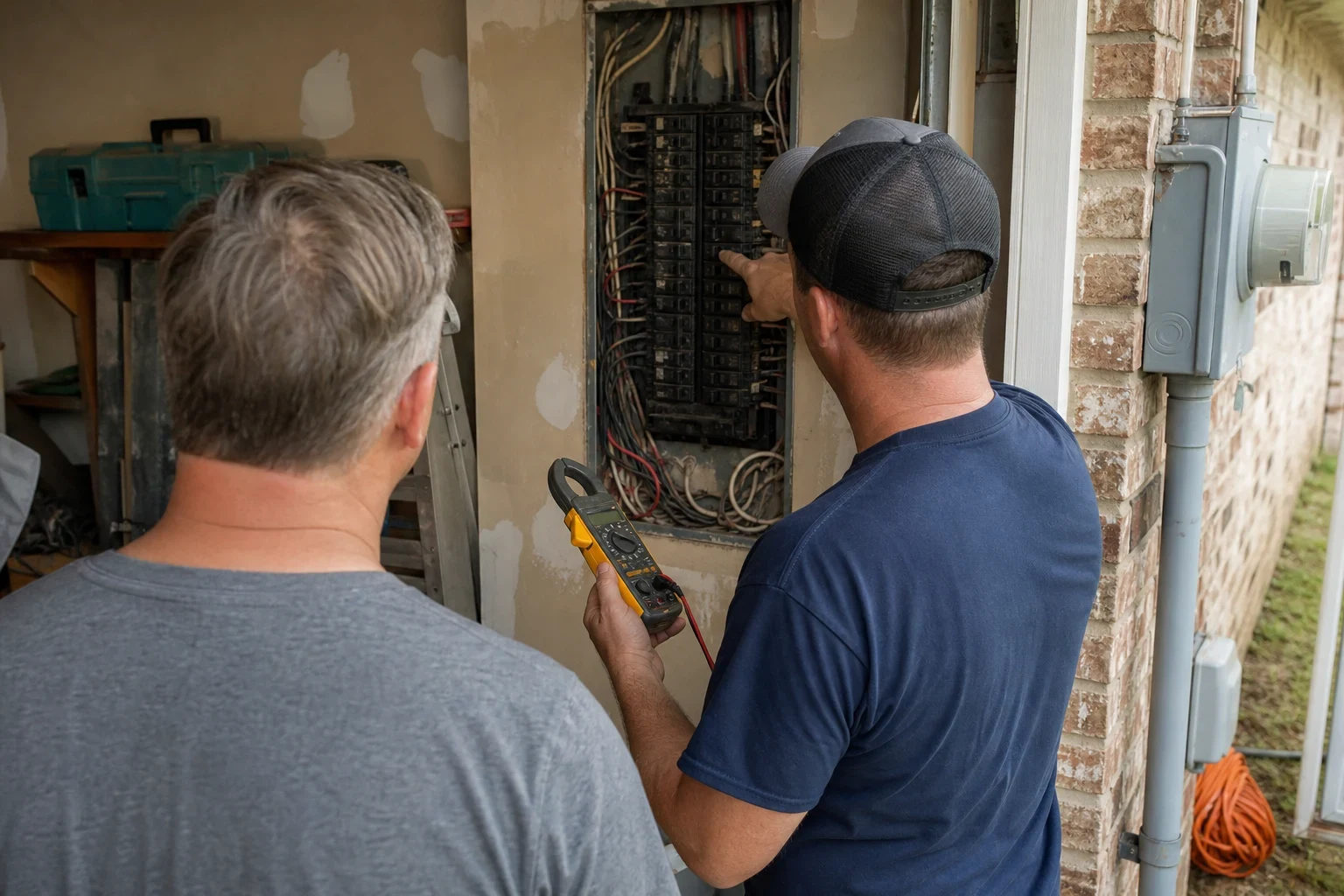
A generator project is a natural time to check the panel. We'll tell you plainly if a panel upgrade should happen first.
What moves the price
Generator jobs differ more than most electrical work, so we price yours after the site visit. The written estimate separates equipment, electrical labor and the permit, so you can see each piece before anything is ordered.
Generator size
Keeping a few essential circuits alive needs a modest unit. Carrying the whole house, air conditioning included, calls for a much larger one.
Transfer switch type
A whole-home automatic switch, a subpanel for essential loads and a manual interlock for a portable unit each involve different parts and labor.
Distance from the panel
A unit set near the panel keeps the feeder short. Longer runs, trenching or routing around a patio or plantings add material and hours.
Panel condition
If your panel lacks space or needs repair before it can accept the switch, that work joins the project.
Fuel and site prep
How far the gas line runs, whether the meter can supply the extra demand and any leveling for the pad all show up in the final figure.
From first visit to first start
- 1
Site and panel visit
We check your panel, meter and gas service, then walk the yard for a good spot. Afterward you receive a written scope naming the unit, the switch and every circuit it will carry.
- 2
Permit and scheduling
We submit the permit and book the gas connection. You'll have the install date and know exactly who is coming.
- 3
Installation day
We set the pad and unit and mount the transfer switch near your panel. Power is off for a stretch while we tie in, and you'll know that window ahead of time.
- 4
Inspection and startup
Once the inspector signs off, we cut utility power on purpose and watch the switch move your loads to the generator, then back again. You'll see the controls, the weekly exercise cycle and what each status light means.
Questions about generator installation
Who will be doing the work at my house?
Licensed and insured electricians from our own small team, working under our Master Electrical License. The people you meet at the site visit are the ones who return for install and startup, so no one new needs your home explained to them.
Is a permit part of the job?
It is. We handle the electrical permit and book the inspection as required by the local jurisdiction. The system doesn't go into regular use until it passes.
How long does installation take?
Once the permit is approved and the equipment arrives, a standby install usually takes one to two working days on site. An inlet for a portable unit is a shorter visit. Waiting on equipment is often the longest part, and we keep you posted along the way.
Could a portable generator do the job instead?
Yes, provided it connects through a listed inlet with an interlock or a transfer switch. A generator should never be plugged into a wall outlet. A portable setup costs less, but you start it, refuel it and manage loads yourself.
Is the work covered after you leave?
Our installation work carries a 1-year workmanship warranty. The generator has its own manufacturer coverage, and we explain how registration works at startup. For ongoing upkeep, our generator service and repair page covers that.
Get backup power planned on your schedule
Bring us a list of the circuits you can't do without, and we'll come see your panel and the yard. You'll finish the visit with a written scope and a crew you've already met.